
“You’re a Jew!"
At the confluence of prejudice, hatred and dementia

Berlin/Bonn, Germany
February 1973
It was winter 1973. I was an 18-year-old college student in a semester abroad program in Germany at the University of Bonn, Germany.
World War II had been over for barely 28 years. Well, not for everyone. But I’m getting ahead of myself.
I had been taking language classes in West Berlin (as it was called at the time). A couple of weeks before classes began, I decided to take a six-hour train ride to Bonn to track down an apartment where I’d live for the next three months.
Apartment hunting then was not like we do it today. “Online” didn’t exist. Even long-distance phone calls in Europe weren’t predictable. So I’d have to head to Bonn IRL.
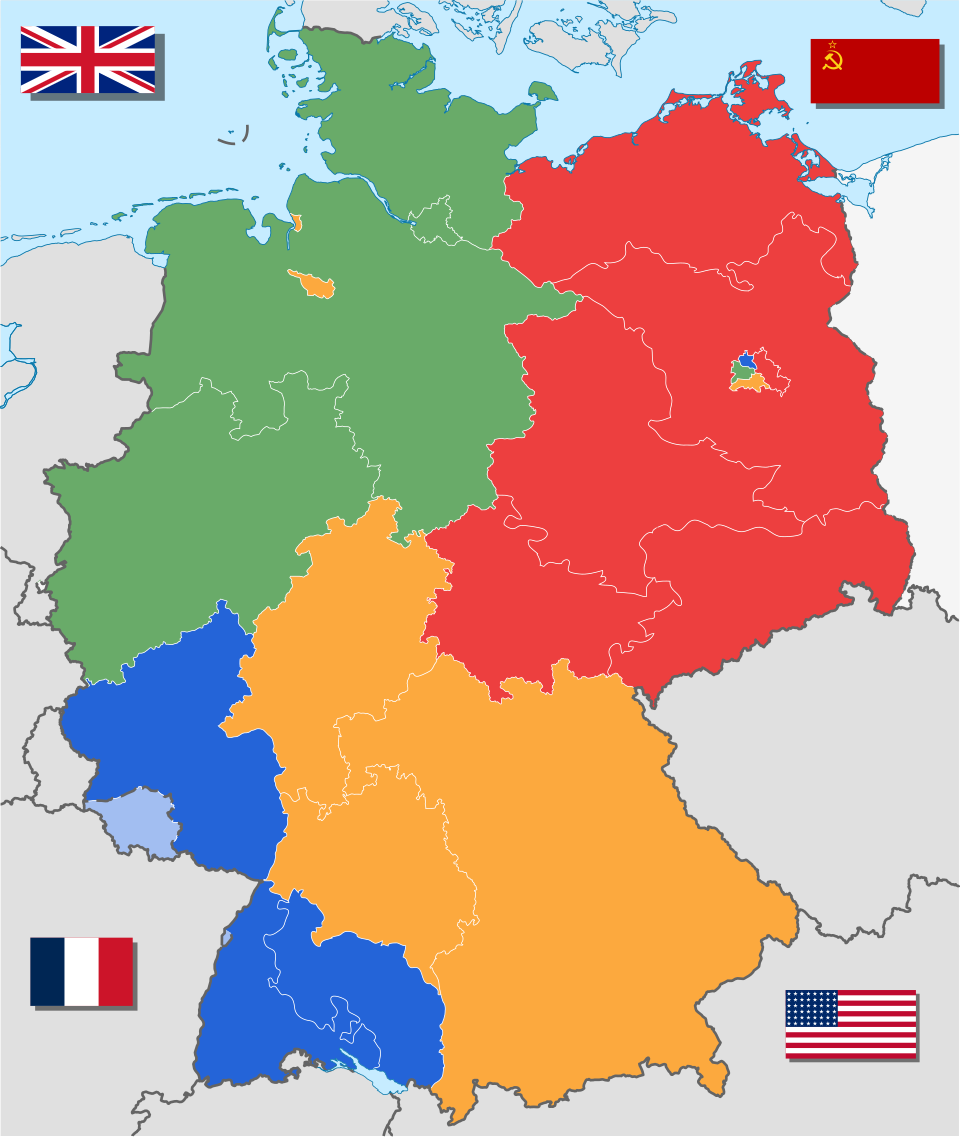
It was the heart of the Cold War. Germany was divided into four zones at the time–one zone for each of the four countries that had prevailed against Germany in World War 2. The Russian zone evolved into East Germany and was under strict Russian control. West Germany had three zones under the jurisdiction of France, the United States and the United Kingdom.
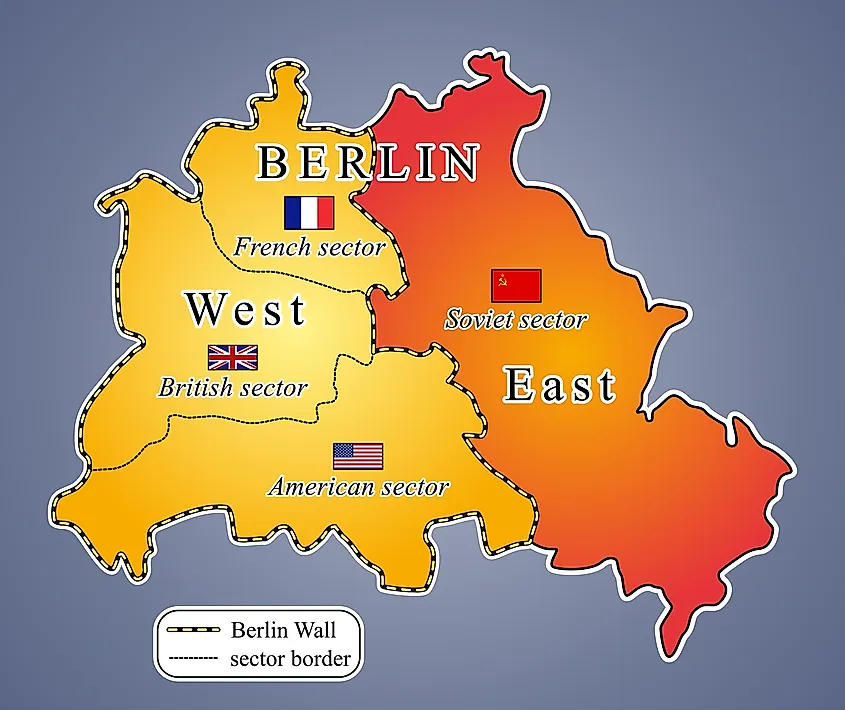
The one exception within the Russian Zone was Germany’s former capital, Berlin, itself divided into four zones, with the Russians controlling what became East Berlin and the three other countries overseeing West Berlin. In effect, West Berlin was an island floating precariously in Russia-controlled East Germany, some 110 miles away from the rest of West Germany at its closest point.
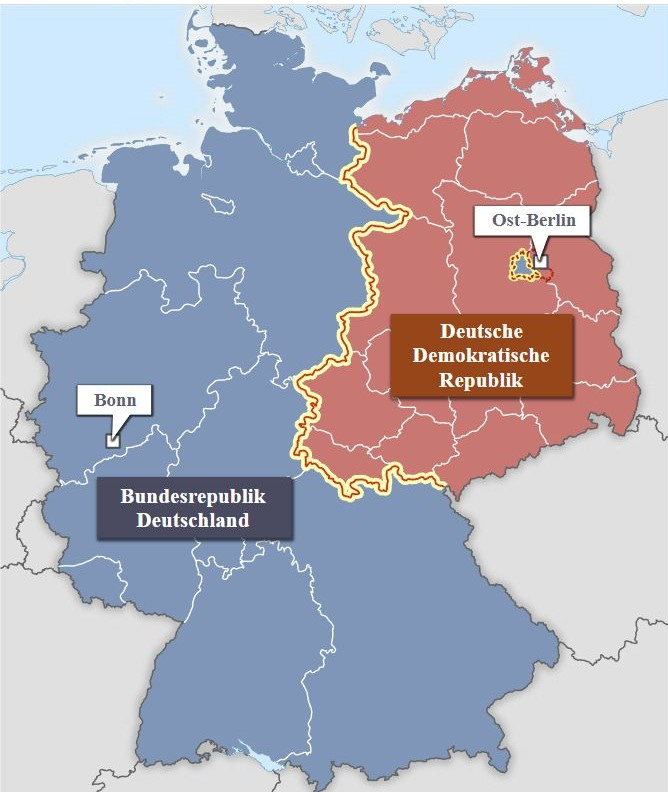
Since the Berlin Wall went up in 1961, the entirety of West Berlin was surrounded by wire, mines, armed guards and the infamous Berlin Wall. Train travel was strictly controlled. There were just four transit routes–to the north, the west, the southwest and the south–and I’d be traveling along the 145-mile rail corridor from West Berlin, through East Germany, to the border with West Germany. That segment was on an East German train. At the border, at Marienborn, we’d switch to a West German train, change trains again in Hannover, and connect in Hannover to Bonn.
Well before I got to the train, border guards were checking passports carefully. More boarded guards checked papers as we climbed aboard the train. I found a seat in an open car with perhaps 150 seats, six across each of the 25 rows.
Border crossings into hostile countries have always brought out the intimidated introvert in me, and I was relieved to find a seat with no one next to me. After I sat down, again another passport check. I then watched as soldiers slammed doors shut and locked the doors to prevent desperate East Germans from trying to sneak aboard the train here or along the route with dreams of escaping to West Germany.
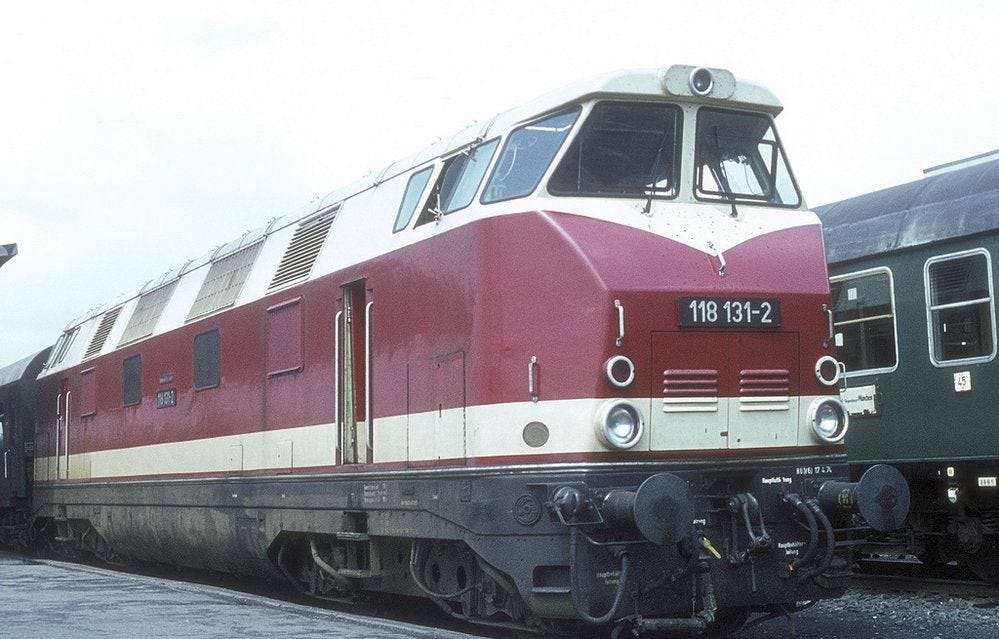
The rails weren’t in great repair, and the train traveled at slow speeds–I’d say about 40 miles an hour tops. The vibrations and bumps sometimes made taking notes or eating difficult. Twice we stopped for inspections by the East German Transport Police, known as trapos. Just in case the train had slowed enough for stowaways to board.
After four hours or so, just before we reached Marienborn, we stopped at a military checkpoint. Stern border guards aided by sniffer dogs boarded the train to check passports.
Somehow, during the ride through East Germany, the scenery had seemed black and white. As we passed into West Germany, colors reappeared. I know this was in my mind’s eye, but it felt real. The drabness of oppression transforming into the Technicolor of the West.
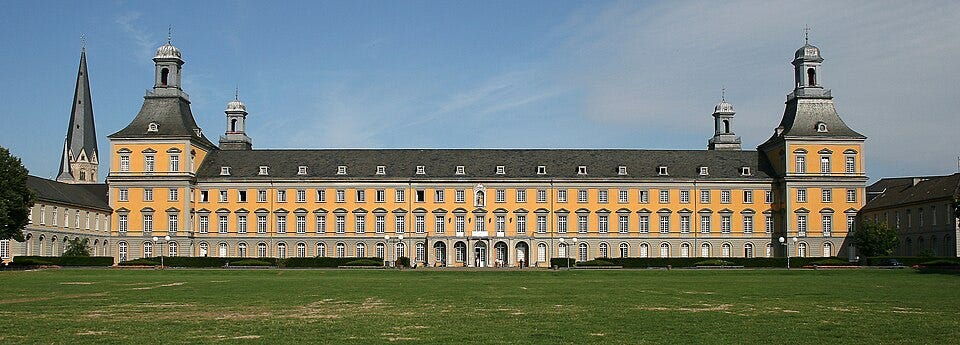
Another four hours later–about 11 hours in total–I arrived in Bonn. Frankly, my memory is vague as to where I ate and slept that night, but I remember picking up a newspaper and checking the classifieds for my net potential home. I found several listings that seemed promising. The next morning, I called the numbers listed for several apartments and soon found me making my way by bus across the Rhine River to a part of the city (once its own town) known as Beuel. The apartment there seemed perfect.
Somewhere back in the USA, the Department of Defense was about to release its first version of GPS with NAVSTAR satellites. Sadly, it wasn’t until 17 years later that GPS had broad civilian use. So, for now, I used a sort of lacquered folding map of Bonn. I think it may have been a precursor to the Rubik’s Cube, because I could never figure out how to fold it back up again. For now, in its open state, I played it like an accordion. To my surprise, I made it to the bus stop the woman had mentioned. Just a short distance from the stop, I found the first home on my list.
An older couple, Herr and Frau Schürmann, had advertised a room for college students. It was in a great location at a reasonable price. The private bathroom was a plus, and it especially appealed to me because the couple included two meals a day in the rental price. If I wanted, I could join them for breakfast and dinner each day.
They seemed like a sweet couple. He was dapper, grey-haired and tall, bordering on gaunt. He wore grey slacks and what Germans would call a “pullover,” and we’d call a “sweater.” It’s funny how many words the German language has appropriated that don’t mean the same thing in English. Who in America would call a sweater a pullover? But if that’s what the Germans want to call it, fine. Of course, borrowing words in the other direction were fair game: We appropriated angst, kindergarten, schadenfreude, kitsch, wanderlust and even hamster. Quick aside, did you know that the English term for hamster was once “German rat?”

Of course, we also use dachshunds (literally “roof dogs” because they were used during medieval times to clean out rain gutters by crawling through them), although many of us call them “wiener dogs” or, amusingly, “datsuns,” despite having no similarity to a Japanese car.
Frau Schürmann wore a kittel schurz, literally “apron dress.” Side by side, Herr and Frau Schürmann sort of looked like that farm couple in the American Gothic painting. He did most of the talking. She did all of the smiling.
They tolerated my abuse of their language and led me through their three-story home. I’d have the top floor with my bedroom and private bathroom. The room was spacious and bright.
We walked downstairs to their living room. Herr Schürmann urged me to sit down, while Frau Schürmann brought in coffee and pastries from the kitchen. “Kaffee und Kuchen” (“Coffee and Pastries”) is a popular mid-afternoon tradition in Germany, but the Schürmanns made a mid-morning exception for me.

They told stories about where they had worked, what their kids were doing, life during the war, and where he had served. They asked me about my family and inquired whether my father had served in Europe during World War II. I told them my mother had been a musician and actress and mentioned that my father was a doctor who had served in Germany immediately after the War.
I kept that last part vague, as I didn’t feel comfortable discussing my dad’s assignment a couple hundred miles away in Nuremberg. As in the Nuremberg Trials, where Allied powers prosecuted prominent German Nazi leaders for war crimes, crimes against peace, and crimes against humanity for their roles in World War II and the Holocaust.
My father’s job? He was an Army psychiatrist assigned to help determine which Nazi leaders were competent to stand trial and which were legally insane. Ultimately, all were deemed competent to stand trial. Nearly all were found guilty. Most were imprisoned or executed, although some proactively killed themselves. In an early example of Don’t Ask, Don’t Tell, Herr Schürmann didn’t press me for details about my dad’s service, and I certainly didn’t offer any.
At one point, they described their enthusiasm toward President Richard M. Nixon and asked me what I thought. What I thought was not to tell them what I thought, perhaps changing the conversation to “How do you think FC Bayern Munich is going to do this season in Europa Cup football?”

We briefly discussed pricing, to be paid a month in advance, which seemed reasonable to me, and we shook hands to firm the deal. I really didn’t need to check out the other apartments in town. Living with the Schürmanns seemed perfect.
I returned to the Bonn train station, where I’d stored my luggage, and took an afternoon train back to West Berlin. The experience was like the previous day’s but in reverse and with more passengers.
Two weeks later, I returned by train to Bonn and moved in that afternoon. Herr and Frau Schürmann greeted me warmly and asked me for the rent money. I counted out the Deutsch Marks.
Dinner that evening was convivial. I don’t remember for sure, but we probably ate schnitzel, fried potatoes and beer. Herr Schürmann inquired as to where my family came from in Europe, and when. I told him Lithuania and Belarus, in the early 20th century. He put his knife and fork down and gave me an unnerving smirk–or a combination grimace-smirk–with a side glance to his wife.
After the schnitzel, Frau Schürmann entered the kitchen with our dinner plates and returned with a platter of apple strudel. “Fresh from the oven,” she beamed, breaking the silence. I stood up to go to my room. Herr Schürmann eyed me intently and silently watched me climb the stairs. I glanced over my shoulder and felt my body shiver.
I decided to call it an early night and unpack the next day. I brushed my teeth (probably), slid into bed and faded to sleep.
At some point mid-sleep, I thought I heard the floorboards creak. They creaked again, more loudly. It took me a moment to realize: This isn’t a dream. My head still on the pillow, I opened my eyes.
Inches away: grey pants. I looked up: It was Herr Schürmann dressed head to toe, from visor cap to leather boots, in full World War 2 German army uniform. Hanging from a leather belt was a sheathed six-inch “nahkampfmesser”(close-combat knife).
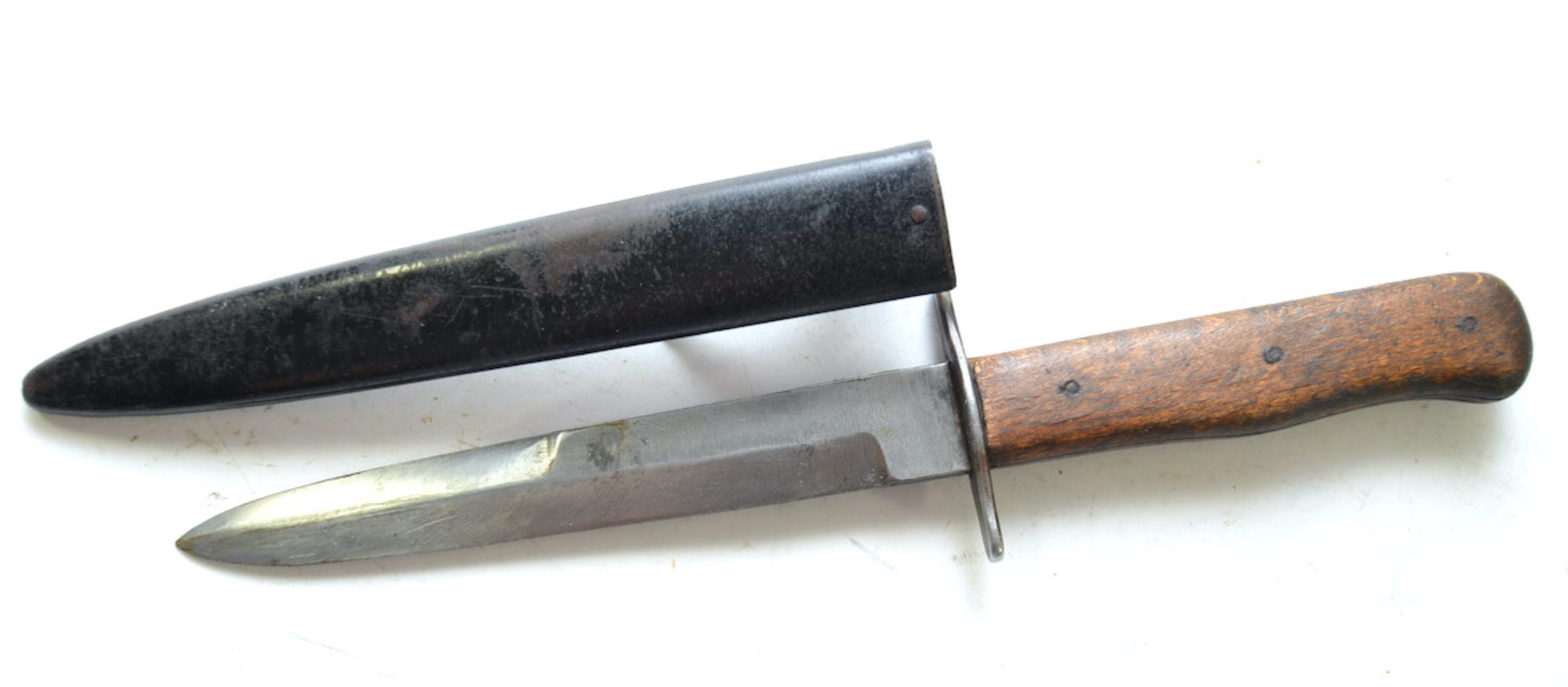
As the sleep fog lifted, I heard him rasp the words, “Du bist Jude.” “You’re a Jew.” He tapped his knife. I leapt from bed and stood across the room in my underwear. He walked toward me, and I immediately feared he might pull down my underpants to confirm my Jewishness.
My fight or flight response kicked in, and I decided flight was the better option. I bypassed the clothes I’d flung over a chair and simply grabbed my suitcase and my shoes and fled down the stairs into the street. Starkers in my underwear.
When he didn’t emerge from the house, I felt it was safe enough to open my suitcase and put on some clothes. I walked a few blocks down the street to a butcher’s shop, found a payphone out front and awakened the coordinator for the study program.
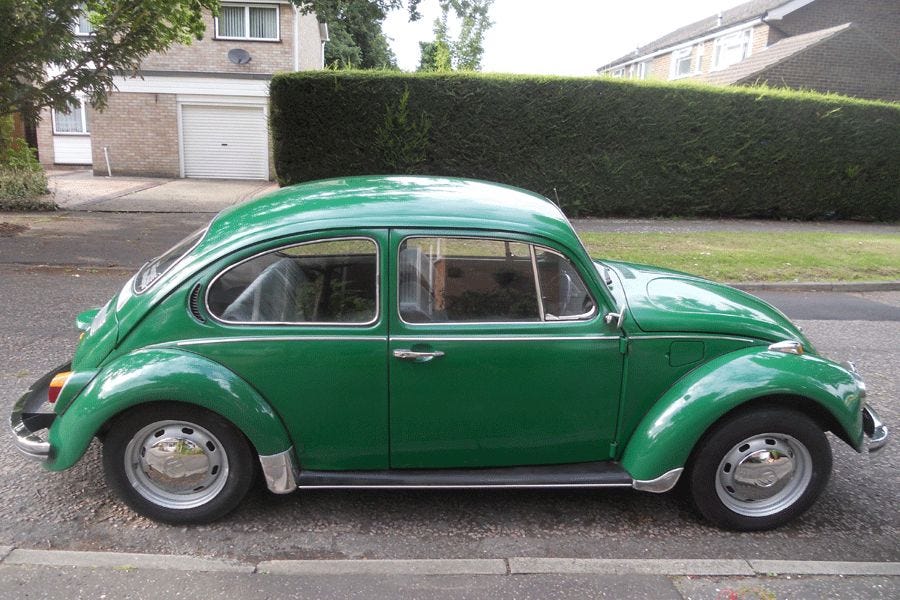
About 45 minutes later, a green VW Beetle pulled up and parked. It was half past midnight. I opened the door, finagled my suitcase into the back seat, sat down and exhaled. The next hour or so remains somewhat vague, but I do remember us pulling up to the Schürmanns’ house. Minutes later, after what seemed to be a heated front-door argument between the coordinator and my landlord, I had my remaining clothes and even my rent money.
I later learned that the conversation simply “might have mentioned” the number 130–an abbreviation of sorts for Section 130 of the German Criminal Code. That section, which defined “Incitement to Hatred,” had just a decade earlier added antisemetic language as an offense, one that carried five years’ imprisonment. For Herr Schürmann, that might have been the equivalent of a life sentence.
The coordinator kindly let me sleep on the couch in his apartment. After an early breakfast he went into his bedroom to make some calls.
Success! He had found a single room in a Studentenheim, a dorm-like residence for university students. Sort of dormitory apartments. Normally, only Germans can use them, but he had explained my situation, and they’d make an exception for me.
While it wasn’t what I’d hoped for–and had spent two days traveling and researching–it was fine: tiny but clean. And safe. It had a one-burner stove, some pots and pans, and, importantly, a door that locked.
I signed a few papers, handed over some of the cash recovered from Herr Schürmann, and started settling in. It turned out to be more than fine. It was also much closer to the university than Chez Schürmann, a tad over a half-mile. And did I mention that it had a door that locked?