
Saving animals in need
Turkish NGO advocates for animal welfare

Istanbul April 2026
I woke up with a sense of excitement and expectation. Today I’d be visiting a refuge for dogs and cats operated by Haçiko Association for Animals in Need, an Istanbul-based NGO that advocates for animal welfare.
The visit would require me to travel from Europe to Asia. Luckily, since Istanbul straddles both continents, the journey took barely an hour from my lodging in Istanbul’s densely urban (and hip) Cihangir neighborhood in Europe, across a bridge over the Bosphorus strait, through Istanbul’s sprawling Asian side, to the refuge’s surprisingly rural location. Surprising because, with a population quickly approaching 17 million, Istanbul is Europe’s most populous city and ranks seventh in the world.
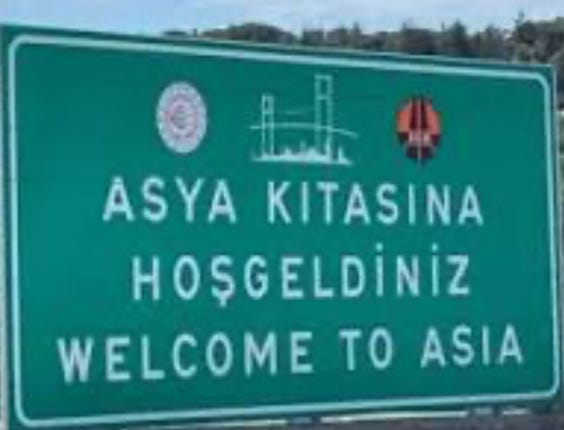
So, for the first time since my arrival in Istanbul a week ago, the constant sound of cars had faded. In its place, the gleeful barking of dogs.
A refuge worker opened the massive gate to the compound, triggering even louder barking. I’ve spent a lot of time around dogs, and I recognized the sound of happy, excited, playful pups. Moments later, my hosts/guides for my visit arrived: Selma and Ibrahim.
Selma Begüm Ayas, head of corporate marketing and partnerships, animal incident manager İbrahim Yeni, and farm manager Atila Avci.
Likely landing closely on one or the other side of age 30, Selma combined the passion of youth with the all-too-adult recognition of reality. Even if the dogs don’t bite, sometimes reality does. That’s when her passion takes over.
Her enthusiasm is infectious, and the mutual admiration between Selma and Ibrahim is obvious.
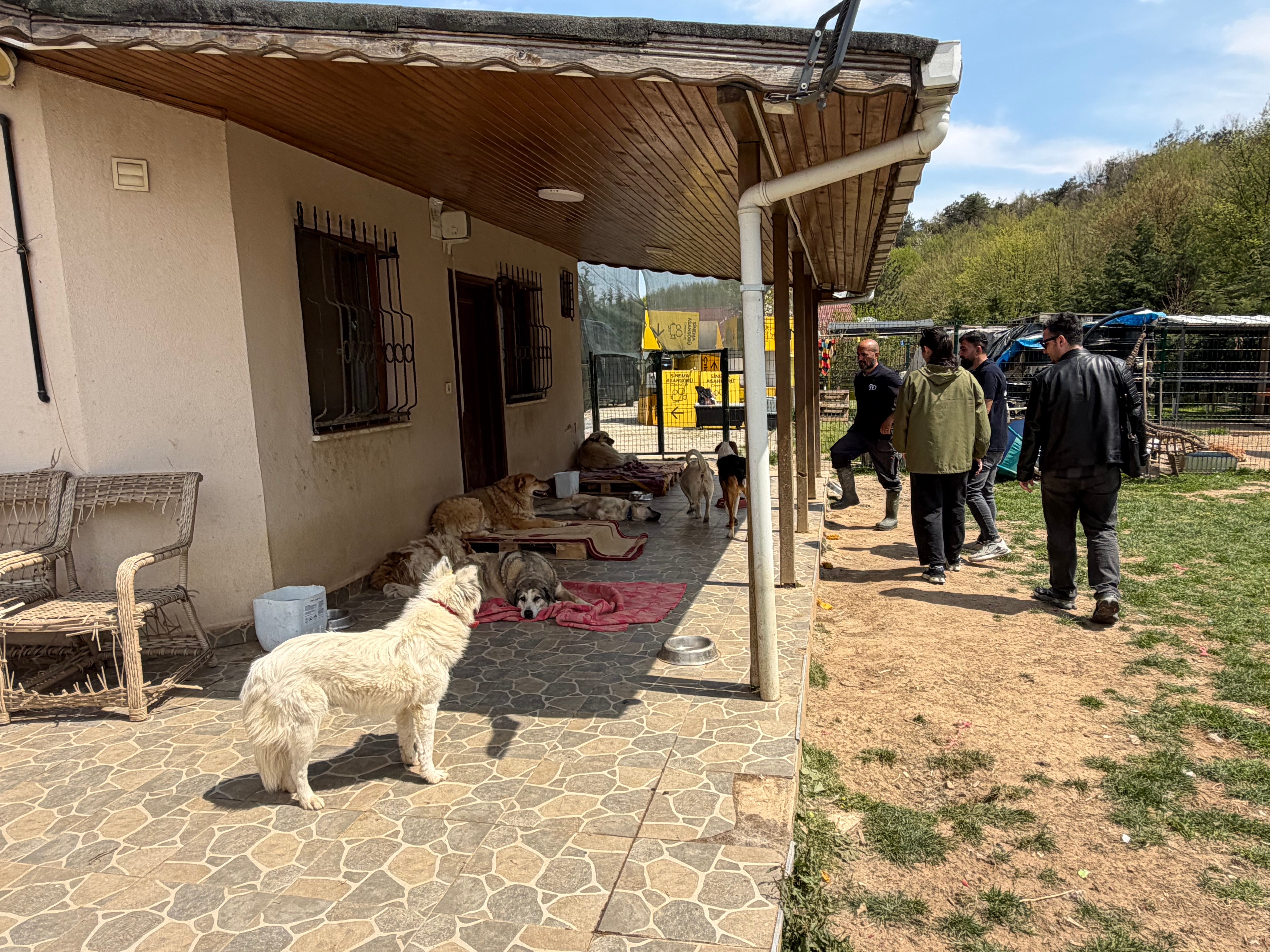
Escorted by a trio of eager and happy pups, we passed through two chainlink gates to a compound housing 55 dogs. A dozen or so had free range of a plot of well-worn grass perhaps half the size of a football field. We’d interrupted their playtime, and they gave us their full attention. Frankly, I don’t think I’ve ever been sniffed and licked by that many dogs. My four adopted kitties at home would not have approved.
Selma explained that this was a refuge, not a shelter.
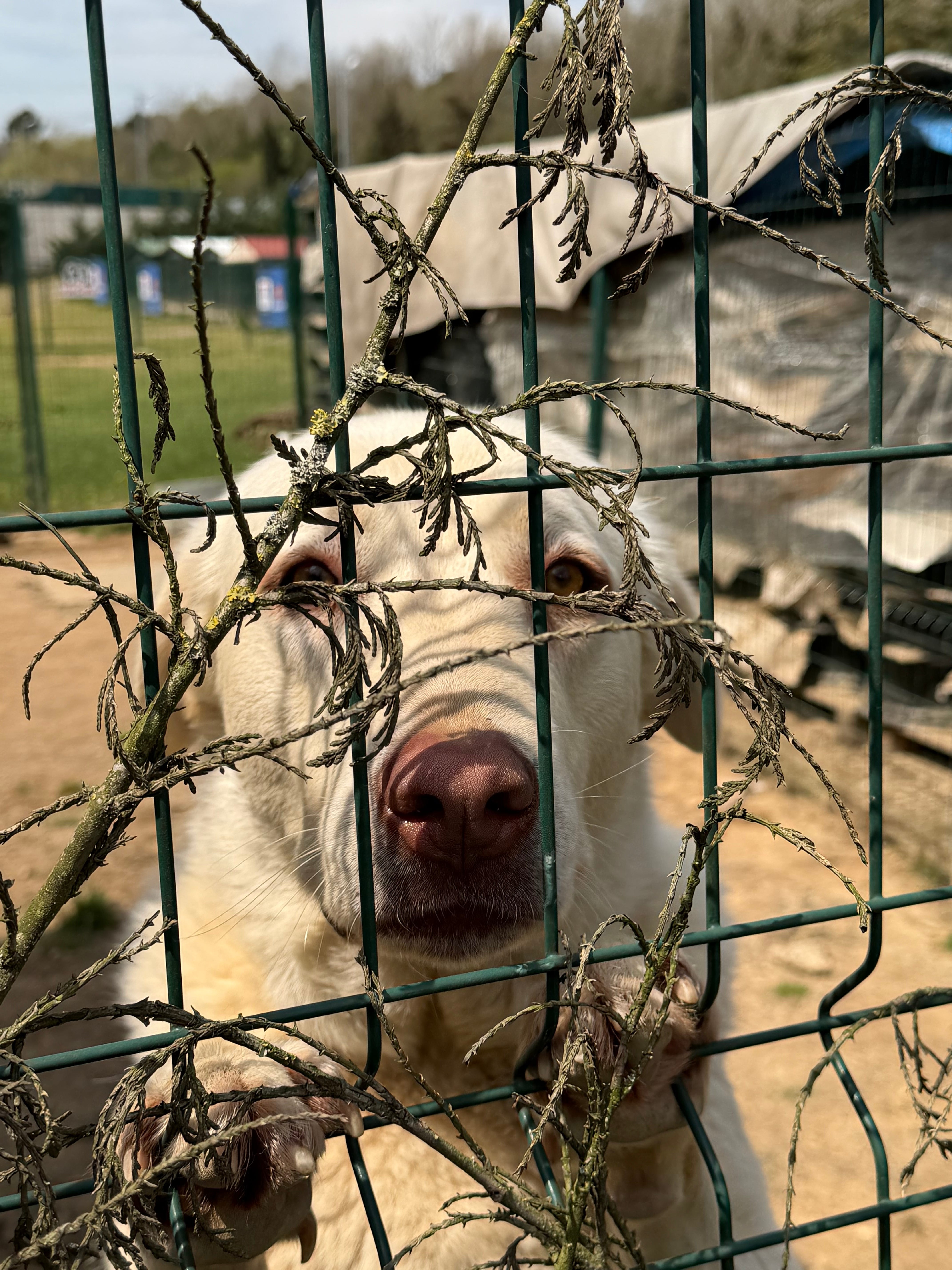
The dogs are grouped and rotated—small groups brought out to eat, to play, to burn off energy for forty-five minutes at a time before being rotated back. It happens twice a day, a kind of rhythm imposed on chaos, enough to give them movement, contact, something resembling routine.
“We try to give them a life,” Selma said. “Not just keep them alive.”
Ibrahim points to a pile of poop just as I’m about to step in it. I was about to refer to such piles as “land mines,” as is the frequent vernacular in the United States. My brain got ahead of my mouth (this time) and reminded me that such terminology is less appropriate where land mines continue to be an issue–such as the estimated 1 million active antipersonnel and anti-vehicle mines, mostly along Turkey’s borders with Syria, Iraq, Iran, and Armenia. Laid mainly between the 1950s and 1990s, they continue to cause death and destruction.
Had I not restrained myself, I would have really stepped in it.
We left the mine field to visit the rest of the dogs, who were in large kennels, most in friendly trios.
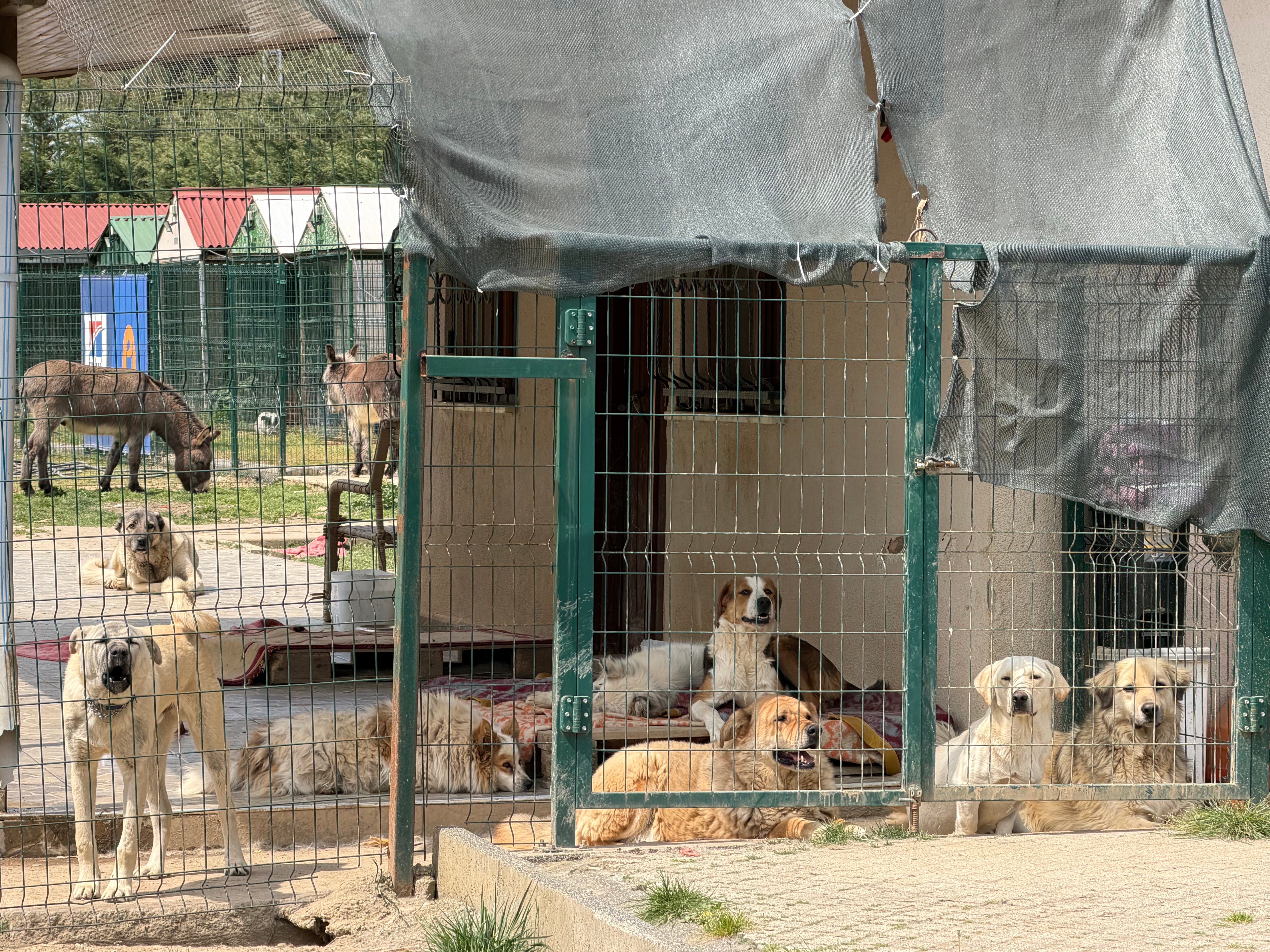
Over the next 15 minutes and with obvious affection, Selma and Ibrahim introduced each dog with its backstory. Nearly all the dogs poked their snouts through the chain link, and I was eager to scratch behind the scores of ears presented to me.
As we walked through, I learned more individual stories. A dog found at a gas station, brought in with a damaged leg, treated, stabilized, now waiting for adoption. Another recovering from cancer. Others who have survived disease, abandonment, or abuse.
Some have been rescued from forest fires, others from piles of rubble from earthquakes. Natural disasters seem to be all too frequent in Turkey.
“They come here from very bad conditions,” Selma said. “Once they’re healthy, we try to keep them social, moving and visible. When you see them later, it’s like a different animal.”
Until recently, most of the work followed a familiar paradigm. Stray dogs and cats were collected, treated, neutered, and then returned to the streets they came from. It wasn’t perfect, but it worked. The animals remained in familiar territories, and the system was able to absorb them, at least for the most part.
Then, last August, a new federal law changed the approach entirely. Animals were no longer meant to be returned. They were to be removed from the streets and placed into shelters.
“There is no capacity for this,” Selma said plainly. “You cannot take millions of animals and suddenly expect there to be space.”
There aren’t enough shelters. Not enough space. Not enough resources to handle the scale of animals being removed.
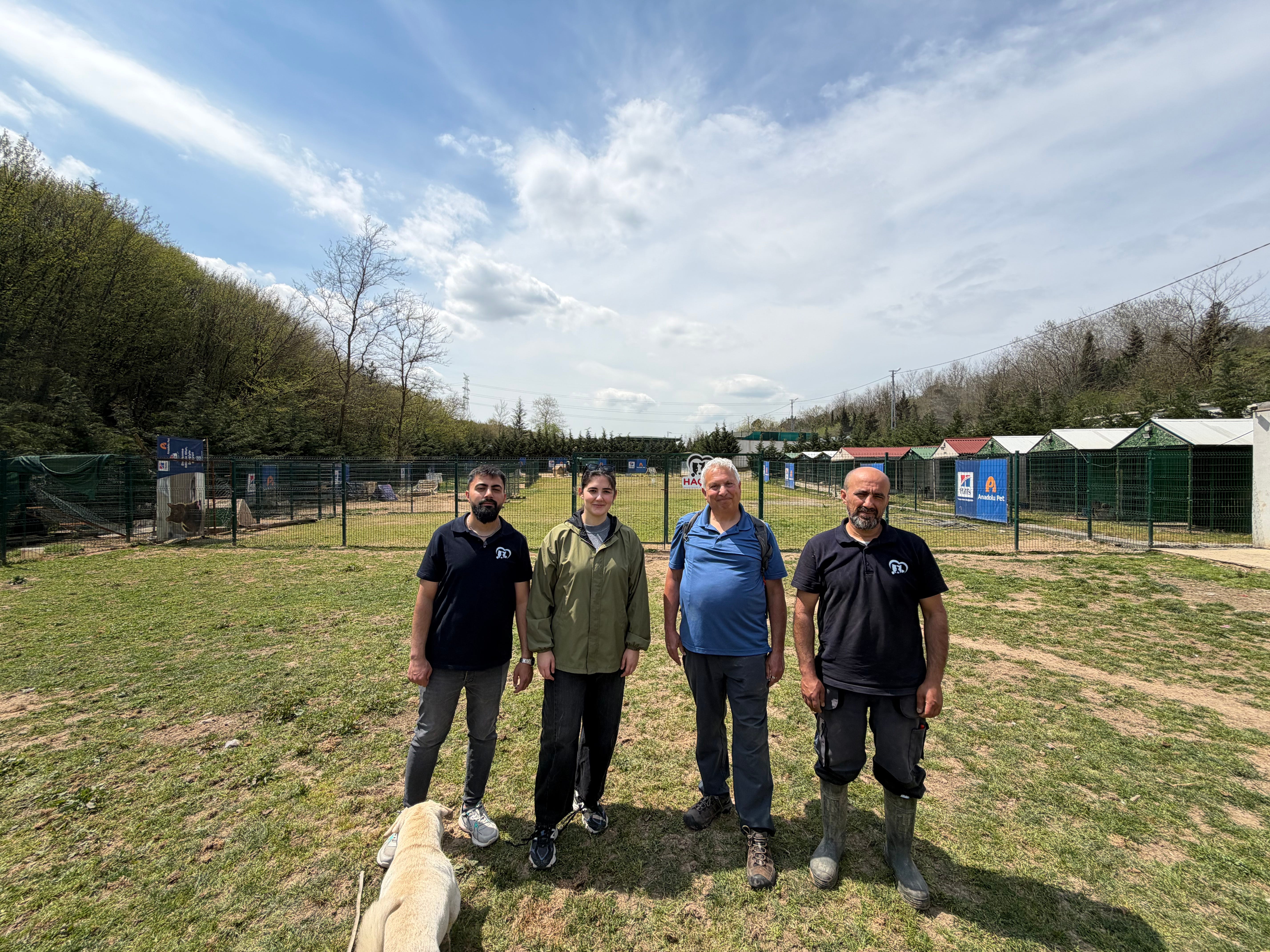
Left to right: İbrahim Yeni - Animal Incident Manager, Selma Begüm Ayas - Head of Corporate Marketing & Partnerships, the author, Atila Avcı - Farm Manager
“When the shelters bring them in, they don’t have anywhere to keep the animals,” she said. “So everything becomes temporary, and temporary is not safe.”
When there isn’t capacity, there isn’t time. And when there isn’t time, the margin for care disappears quickly.
That shift has changed the nature of the work. What once had elements of routine has become something closer to triage. Calls come in constantly—reports of animals injured on roads, abandoned in remote areas, weakened by disease, or pulled from fire zones in critical condition. Someone has to go.
Usually it’s Ibrahim, who handles field operations, moving from one situation to the next without a real schedule. The day isn’t planned. It unfolds in real time.
Ibrahim flipped his phone open, and I watched as he scrolled through screens of messages.
As he lowered his phone, I asked how many days of messages that represented it. Selma translated my question. Ibrahim raised one finger.
Just one day, today. And it was barely half over.
“You don’t plan your day,” Selma said. “The day finds you.” Then she paused and added, “And sometimes it finds you faster than you’re ready for.”
When an animal is brought in, there’s a brief window where everything narrows to the immediate. A veterinary check. Stabilization. Water, if they can take it. Food, if they’re strong enough. Treatment begins. Sometimes that’s enough to turn things around.
And sometimes it isn’t.
“But you still try,” Selma said. “Even if you know it’s late and maybe even hopeless, you still try. That’s all we can do.”
Despite the government’s drastic paradigm shift, there has been no increase in government support. Everything depends on donations, on individuals who sponsor animals month to month, and on companies that provide funding or supplies in exchange for visibility.
“It’s always about resources,” Selma stressed. “If we had more, we could do more. That’s the simple truth.”
And the pressures extend beyond funding. Adoption, which has typically been a release valve, has become more complicated. More paperwork. More restrictions. Fewer opportunities to move animals out of the system and into homes. At the same time, access to municipal shelters is limited. Permissions are required. Sort of an “out of sight, out of the public’s minds” approach.
Selma’s sparkling eyes dimmed for a brief moment.
“There are places we can’t even go without permission,” she explained. “And sometimes, you don’t want to know what is happening there.”
What’s out of sight is never out of Selma’s mind.
So the work becomes more contained, more urgent. Protect what you can. Keep as many as possible within your own reach. Make space where there isn’t space.
After 45 minutes of dog time, Selma asked if I’d like to visit the cats. I responded that, well, frankly, I was even more of a cat person.
Before we moved on to the felines, we took a brief coffee break in the office. Time to swap cat stories.
I told Selma about a cat I had met years earlier on a small island in Croatia. Each time I returned, the same thing happened. I would walk down the same path, and the cat would appear in the same place, as if the time in between didn’t quite matter.
Seven years in a row.
The locals had a name for her—Miranda. Latin for “she who should be admired.”
Selma smiled when I finished. “They remember,” she said. Then she added, “People think they don’t, but they do. They remember everything.”
And in a way, that’s what this place is built around—not just intervention, but acknowledgment. That these animals are not interchangeable. They aren’t statistics. They are individual living creatures.
As we sat in relative quiet, Selma discussed the organization—how it started, what it’s become, how they manage to keep everything moving.
Haçiko (officially the Association for the Protection of Animals from Helplessness and Neglect) was founded in 2010 by Ömür Gedik, a well-known Turkish singer who had already been working informally with stray animals. It strives to lead the way in providing food, care, and treatment for animals. It’s also about and to draw public attention to these animals.
That includes working toward animal rights being adequately represented in relevant laws and regulations. Therefore a major focus is influencing public opinion and inspiring society on animal rights.
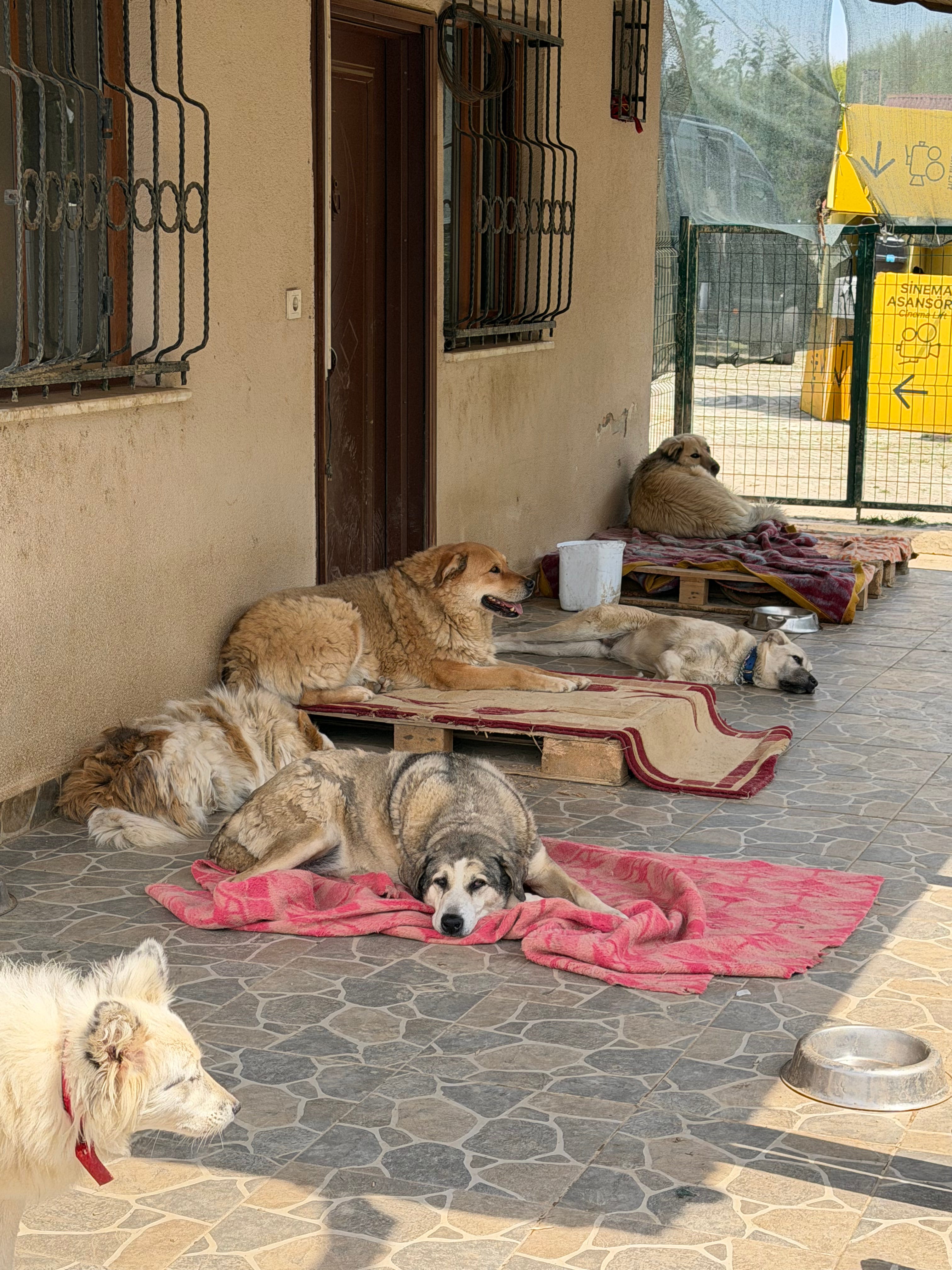
“It’s not just about providing a refuge,” Selma explained. “We work on all aspects of animal rights and protection around the country.”
Its mission is as much advocacy as rescue.
I asked Selma where she’d learned to speak such perfect, nearly accent-free English. She explained that she’d attended college in the U.S. for 10 years.
“Where?” I asked.
“Most of the time in Boston.”
“I grew up just down the road in Rhode Island!”
“I spent several years attending school in Providence!”
“I lived in Providence!”
To take the small world phenomenon to an extreme, we realized that we’d both lived in the same apartment building, admittedly some 45 years apart.
With that, it was time to visit the kitties!
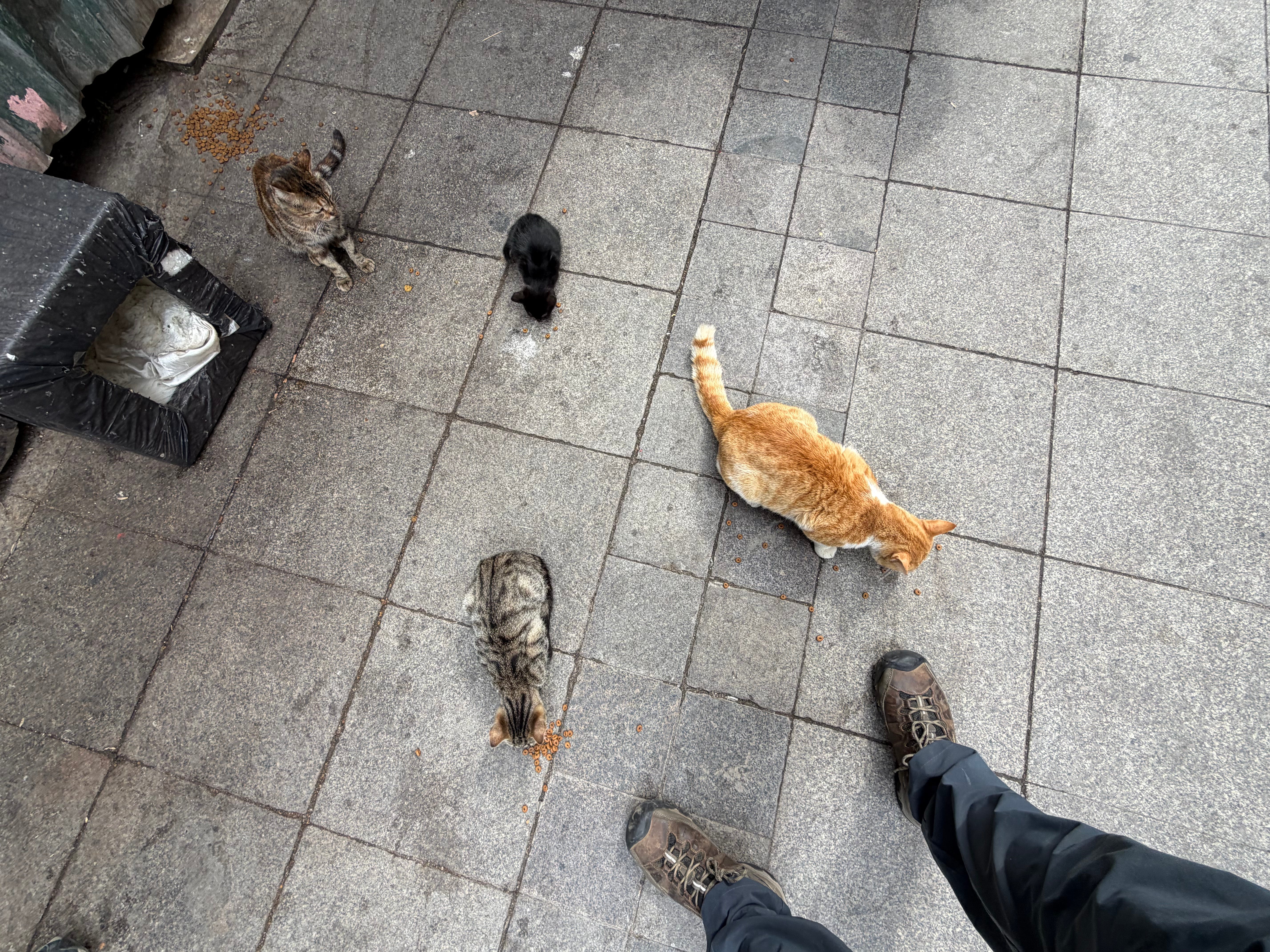
The cats numbered just 10, perhaps a reflection of the Turkish feline adoration. Despite a streetcat population that some estimates put at as many as half a million, Istanbulites are quick to point out that, while the cats may not belong to anyone, they’re taken care of by almost everyone.
There are even vending machines where you put in coins, and dry food drops into a bowl.
Shop owners and residents place food and water and even shelters on the streets. If a cat is found without a clipped ear (the notching done to indicate the animal has been neutered), local vets will perform the surgery. Likewise, sick or injured cats are quickly scooped up by their “neighbors” and taken in for treatment
It feels like a primary goal is to keep the cats out of the “system.”
Islamic tradition explains in part this admiration for cats. The Prophet Muhammad is often associated with gentleness toward cats, reflecting a broader view of them as clean, self-maintaining animals that can comfortably share human spaces. Cats, because of their natural cleanliness and calm presence, are considered ritually pure in Islam—free to wander through homes and even mosques without concern.
One of the most famous stories tied to this is the tale of Muezza, a cat said to have belonged to the Prophet. In the story, Muezza falls asleep on the sleeve of his robe just as it’s time for prayer. Rather than disturb the cat, he quietly cuts the fabric and leaves it behind, choosing compassion over convenience.
In the meantime, I’m asked to make a quick squeeze through a slightly opened door so none of the cats confirm their reputation as escape artists. I enter successfully, and several cats converge to rub my legs, which they treat as slalom poles.
One, a sleek black cat by the name of Panther, treats my legs more as low rungs on a ladder. Within seconds he’s climbed from legs to torso to shoulders. He perches there in his best “I’m king of the world” pose.
He stays there as I meet the other cats. Most are in the enclosed room, probably about 200 square feet with plenty of climbing and play activities. A window opens to an enclosed outside area.
I notice that there’s no telltale scent of pee or poop, and there aren’t the typical territorial cat spats. This is a happy space.
Selma laughs as Panther becomes a permanent fixture on my shoulders. “I think we found our next adoption,” she tells Ibrahim. If only.
As we left the cat room, Selma pointed out that Haçiko would be moving to a larger facility with more expansive grounds in about a month. I promised to visit the next time I returned to Istanbul.
In the meantime, the phone continued its relentless chirping. Another message. Another situation. Another rescue.
I had to remind myself that this was more than an opportunity to spend time with all these sweet, happy, cared-for dogs and cats. These were the success stories, and each story reflected the effort that went into the rescue and the ongoing efforts to keep the animals safe and well–and to get them adopted.
These success stories were sadly the exception given the organization’s limitations, both financial and governmental. There’s so much more work to be done.
It just keeps going.
One call, and then the next.
And somewhere in that constant motion, there’s a better chance that something will be saved.
Learn more about the organization at https://haciko.org.tr.